
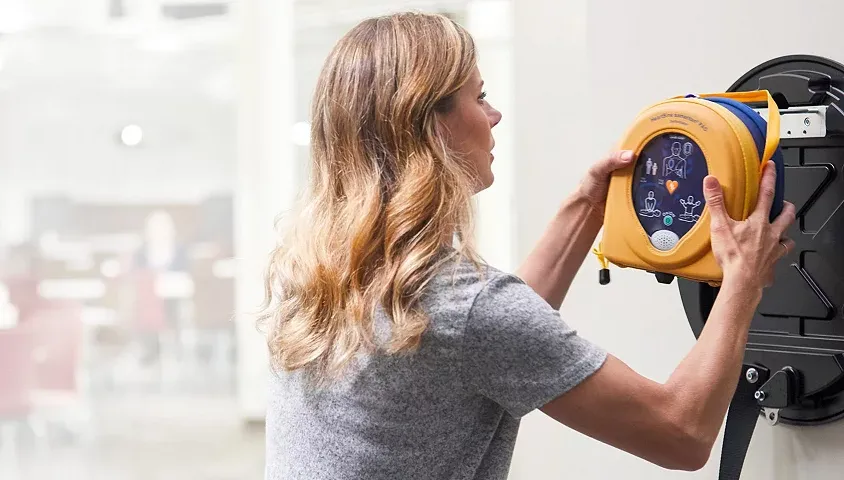
From 1 January 2026, new legislation will require many commercial buildings in Australia to have an Automated External Defibrillator (AED) installed on site.
Recent guidance issued by the Minister for Health and Wellbeing has provided important clarification on which buildings are affected, helping landlords, property managers and business owners understand their obligations more clearly.
If you own, manage, or operate a commercial property, now is the time to review whether your building will need an AED.
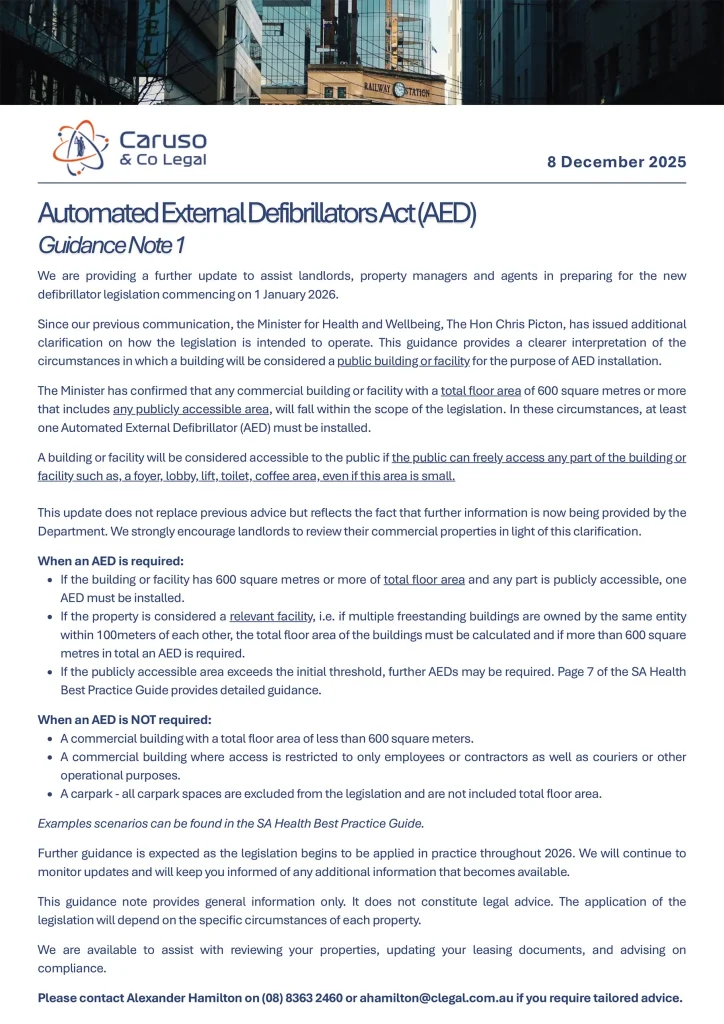
Updated guidance confirms that any commercial building or facility with a total floor area of 600 square metres or more will fall under the legislation if any part of the building is accessible to the public.
Importantly, the publicly accessible area does not need to be large. Even limited access areas can trigger the requirement.
According to the guidance note:
This clarification means that many buildings previously thought to be exempt may now require an AED.
An AED must be installed if:
AEDs may also be required where:
Further guidance on AED numbers and placement can be found in the SA Health Best Practice Guide.
An AED is not required if:
Sudden cardiac arrest can happen anywhere, at any time. AEDs save lives, but only when they are readily available.
Beyond compliance, installing an AED demonstrates a commitment to workplace safety, tenant wellbeing, and public protection. With enforcement expected to increase throughout 2026, acting early allows time to choose the right equipment, installation location, and ongoing management plan.
We recommend:
You can read the full Automated External Defibrillators Act (AED) – Guidance Note 1, issued on 8 December 2025 by Caruso & Co Legal, for detailed clarification and examples here:
At Defibrillators Australia, we help businesses, landlords, and property managers understand their obligations and select the right AED solution for their building.
If you are unsure whether your property requires an AED, or you would like advice on compliant AED models, placement, or ongoing management, our team is here to help.
We can provide advice on what AED you would need in your property. However if you do require legal advice, please contact Alexander Hamilton from Caruso & Co Legal on (08) 8363 2460 or ah*******@********om.au if you require tailored advice.
Get in touch today to make sure your building is compliant and prepared before January 2026.