
Defibrillators for the Workplace
Meet your duty of care and protect your people with a workplace AED
Cardiac arrest doesn't clock off at 5pm
Sudden cardiac arrest can strike anyone at any time — regardless of age, fitness level or health history. The workplace is no exception. Data from NSW shows that approximately one-third of all ambulance calls occur during working hours, with a significant proportion coming from office and commercial environments. Across Australia, around 25,000 to 30,000 people experience an out-of-hospital cardiac arrest every year.
The challenge in any workplace is time. The average ambulance response time across Australian cities is 8 to 11 minutes. Without defibrillation, brain damage can begin within just 4 minutes, and survival chances fall by 7 to 10 per cent for every minute that passes. By the time paramedics arrive, an AED on site could already have made the difference between life and death.
The good news is that outcomes for cardiac arrests in the workplace are among the best of any location outside a hospital. Bystanders are present, emergency services can be called quickly, and if an AED is available, the chain of survival can begin immediately. Having a defibrillator in your workplace is one of the most practical steps you can take to protect your team.
What Australian WHS law says about workplace AEDs
There is currently no blanket national law requiring all Australian workplaces to install a defibrillator. However, the Work Health and Safety (WHS) Act requires every employer — referred to as a Person Conducting a Business or Undertaking (PCBU) — to do what is reasonably practicable to ensure the health and safety of workers. As AEDs become more affordable and more widely available, the argument that installing one is not reasonably practicable becomes harder to sustain.
In South Australia, the obligation is more explicit. Under the Automated External Defibrillators (Public Access) Act 2022, commercial buildings open to the public with a floor area of 1,200m² or more must have a publicly accessible AED installed. The compliance
deadline for non-Crown buildings was 1 January 2026, with penalties of up to $20,000 for non-compliance.
Beyond the legal minimum, there is a growing expectation across corporate Australia that businesses will have an AED as part of their emergency response plan. Failure to have one available during a workplace cardiac arrest has the potential to expose a business to significant legal and reputational risk. Conversely, having an AED — and a clear plan for using it — demonstrates a genuine commitment to the safety and wellbeing of everyone on your premises.
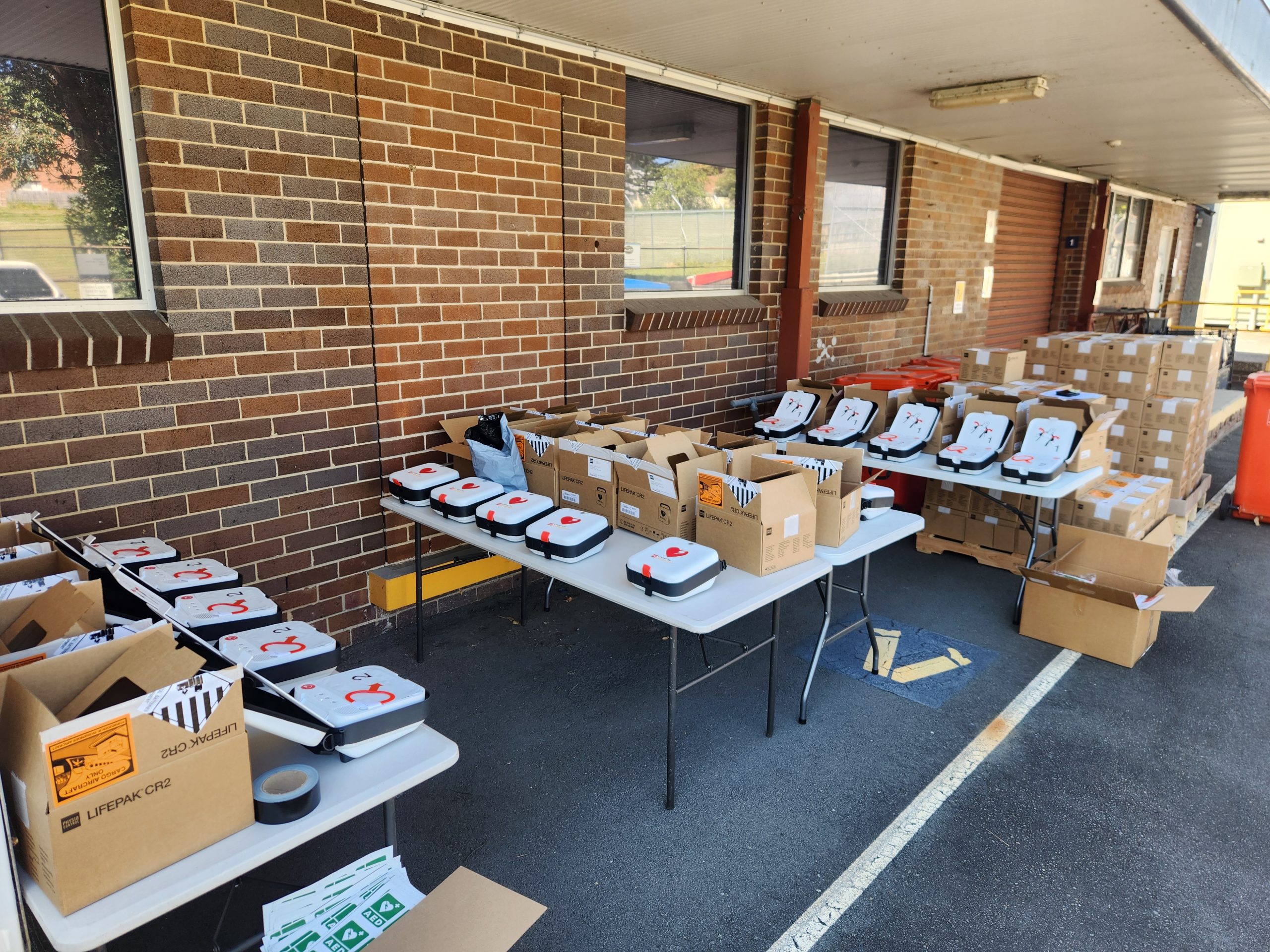
Defibrillators Australia was recently awarded a major contract to supply and upgrade 900 AEDs for Ausgrid across their network — a clear example of how large organisations are proactively investing in workplace cardiac safety. Read more about the Ausgrid AED contract here.
Why businesses choose Defibrillators Australia
Free delivery on every order
We offer free freight on every defibrillator and defibrillator bundle, Australia-wide. No hidden costs, no minimum order size. Whether you need one device for a small office or a fleet of units across multiple sites, delivery is always included.
Simple for untrained staff to use
Every AED we stock is designed to be used by anyone — no formal medical training required. Clear voice prompts and visual instructions guide the user through each step of the process. Your team does not need to be first aid certified to save a life.
Expert advice for your workplace
Our team works with businesses of all sizes, from single-office companies to large corporates with multiple campuses. We can help you assess how many AEDs you need, where to position them, and which device best suits your environment and budget.
Ongoing support and maintenance
An AED is only valuable if it works when you need it. We supply devices from leading brands with long battery and pad shelf lives, and our team is available to help you with replacement consumables, maintenance questions and ongoing support at any time.
Where should a workplace AED be located?
Placement is everything in a cardiac emergency. The standard guidance is that an AED should be reachable within 90 seconds of brisk walking from any point in the workplace. For most single-floor offices, one centrally positioned device — near the kitchen, lunch room or main reception — will cover the space effectively.
Multi-level offices should consider one AED per floor, or at minimum one device on every second floor positioned near stairwells or lifts. For large open-plan workspaces, high-traffic areas such as the main entrance, common areas and meeting room hubs are ideal locations. AEDs should always be clearly signed, mounted at a visible height and never locked away in a cabinet that requires a key.
We stock a range of AED wall cabinets and signage designed to keep your device protected and immediately accessible. If you are unsure how many AEDs your site requires, call our team on 1300 331 193 for a personalised recommendation.
Recommended defibrillators for offices and workplaces
The right AED for your workplace depends on your site size, staff numbers and how much ongoing maintenance you want to manage. Here are our top picks for corporate and office environments.
-
Sale!
 FREE SHIPPING
HeartSine 360P Defibrillator – Fully Automatic
$2,495.00Original price was: $2,495.00.$1,599.00Current price is: $1,599.00. -

LifeVac Genuine – Parents Soft Travel Bag Unit – 4 mask Pack
$134.99 -
Sale!
 FREE SHIPPING
LIFEPAK CR2 Essential – Fully Automatic AED – Defibrillator
$3,095.00Original price was: $3,095.00.$2,199.00Current price is: $2,199.00. -
Sale!
 FREE SHIPPING
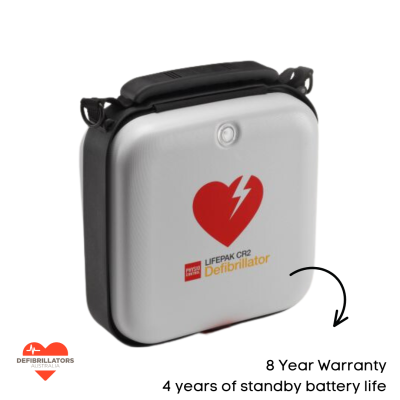
LIFEPAK CR2 Connected – Fully Automatic AED – Wi-Fi Defibrillator
$3,375.00Original price was: $3,375.00.$2,599.00Current price is: $2,599.00.
Frequently asked questions about workplace defibrillators
Is a defibrillator legally required in Australian workplaces?
There is currently no national law requiring all workplaces to install a defibrillator. However, in South Australia, commercial buildings open to the public with a floor area of 1,200m² or more must have a publicly accessible AED, with the compliance deadline of 1 January 2026. Nationally, the WHS Act requires employers to do what is reasonably practicable to protect workers, and installing an AED is increasingly considered part of that obligation. Other states are actively watching SA’s legislation and similar requirements are expected to follow.
Who is responsible for the AED in the workplace?
Under WHS legislation, the Person Conducting a Business or Undertaking (PCBU) — typically the employer, business owner or building manager — is responsible for providing and maintaining first aid equipment. This includes ensuring any AED on site is regularly checked, that consumables are in date, and that staff are aware of the device’s location. We can help you set up a simple maintenance schedule to stay on top of this.
What happens if someone uses an AED and the person doesn't survive?
Good Samaritan legislation across Australian states and territories protects anyone who uses an AED in good faith during an emergency. Users cannot be held liable for attempting to save a life. Additionally, an AED will not deliver a shock unless the device detects a shockable heart rhythm — it cannot cause harm by being used incorrectly. Having an AED and a response plan in place is also far more likely to protect a business legally than not having one at all.
How many AEDs does our office need?
The general recommendation is that an AED should be reachable within 90 seconds of brisk walking from any part of the workplace. For a single-floor office, one centrally placed device is usually sufficient. Multi-level offices typically need one per floor or one per every second floor near the stairwell. If you have multiple buildings or a large open campus, contact our team on 1300 331 193 and we can help you work out the right number and placement for your site.
5 Star Customer Service
Our team of Heartsafe Angels are ready to help with any questions you have regarding our AEDs.
Call or email us today 1300 331 193
Protect your team
A workplace AED is one of the most meaningful investments a business can make in its people. Our team is ready to help you find the right device, understand your obligations and get set up quickly — with free delivery on every order.
Shop online or call us on 1300 331 193 to speak with a specialist.